Sports chiropractic and rehab in Culver City
Pain is a movementproblem. We fixmovement.
We measure it, treat it, and load it until it holds.
- 11
- years open
- 4.9
- rating
- 210
- reviews
composite
Five tested movement patterns, each scored out of twenty, totalled into one number we can re-run.
- Squat pattern
- 18 / 20
- Hip hinge
- 16 / 20
- Gait symmetry
- 17 / 20
- Overhead reach
- 14 / 20
- Trunk control
- 17 / 20
re-tested at visit 06. progress is measured, not assumed.
- 11 years in Culver City
- 4.9 across 210 reviews
- CCSP on every shift
- +14 points average at re-test
Three clinics told me to stop running. They rebuilt my stride instead.
A visit count and a total cost on day one. Nobody else did that.
Tore my labrum surfing in March, back in the water by June with a stronger shoulder.
01 / start here
What hurts?
Pick your problem from the index. Every plan here starts with the thing that brought you in, not with a pitch about us.
- C-01Low back painWe find the movement pattern that keeps flaring it up, then rebuild it under load.
- C-02Neck & desk postureDesk posture is a strength problem. We treat the joint, then train the position.
- C-03Shoulder & overheadOverhead pain usually starts below the shoulder. We assess the whole chain.
- C-04Running injuriesGait analysis plus tissue work, so you return to mileage without the relapse loop.
- C-05Headaches from the neckCervicogenic headaches respond to targeted joint work and soft tissue release.
- C-06Sciatica & disc painWe confirm the source with an exam first, then dose traction and loading to it.
- C-07Hip & kneeStiff ankles and weak hips write most knee complaints. We test both before treating the knee.
- C-08Post-surgical rehabWe bridge the gap between cleared by your surgeon and actually ready to train.
- C-09Nothing hurts, I want testingA scored baseline before the season, so mid-season changes mean something.
- C-10Recovery between sessionsShort passive visits scheduled around your training calendar, not instead of it.
Every row is a page: what it usually is, what we test first, and how many visits it takes. Your pick carries into the booking form.
02 / the assessment
The Baseline Score
A forty-minute intake that ends with a number, a diagnosis, and a plan. We re-run it at visit six and put the two side by side.
composite
Five tested movement patterns, each scored out of twenty, totalled into one number we can re-run.
- Squat pattern
- 18 / 20
- Hip hinge
- 16 / 20
- Gait symmetry
- 17 / 20
- Overhead reach
- 14 / 20
- Trunk control
- 17 / 20
re-tested at visit 06. progress is measured, not assumed.
step_01 / screen
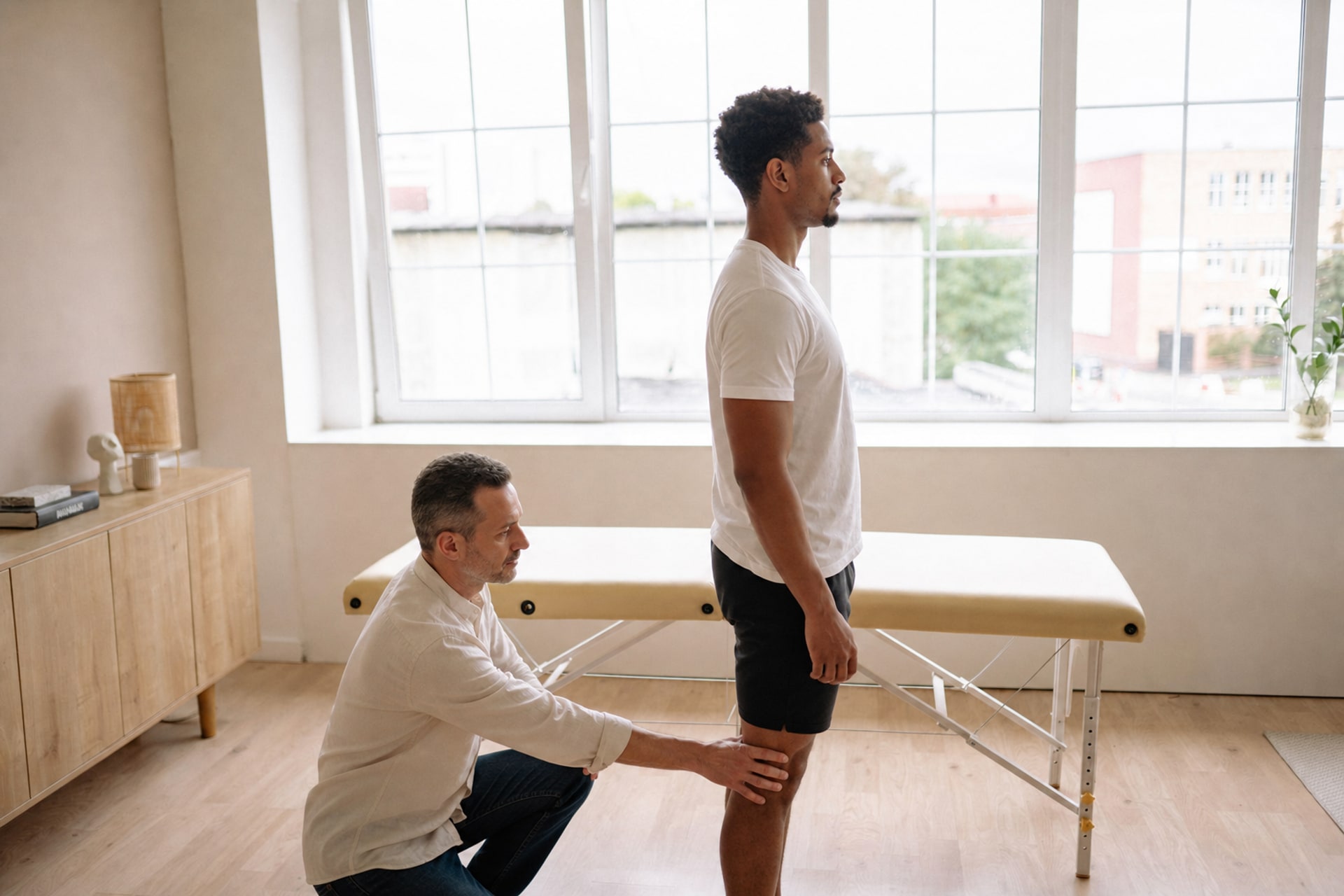
Full-body movement screen
Squat, hinge, gait, overhead reach. Twelve tested positions, each scored, so we see how the whole system moves before we touch the painful spot.
step_02 / exam
Hands-on clinical exam
Joint-by-joint orthopedic testing plus palpation. We separate the site of pain from the source of pain, because they are rarely the same thing.
step_03 / history
History and load review
Training volume, sport demands, and prior injuries, cross-referenced against what the screen just showed.
step_04 / score
Composite scoring
Each of the five tested patterns is scored out of 20 and totalled into one composite out of 100.
step_05 / roadmap
Your score and roadmap
You leave with the composite, a written diagnosis in plain language, and an exact visit plan with the total cost in front of you.
flat, all in
$120
New patient assessment, all in. No mandatory imaging, no prepay contract, no surprise add-ons.
two ways in
The self-assessment is ungated. No name, no email, and no medical history before you see a number.
03 / what we do
The work, priced
04 / outcomes
Progress is measured, not assumed
We re-run your score at visit six and put the two side by side. The same discipline applies to the clinic: these are the numbers across everyone who finished a care block last year.
Internal outcomes log, 412 completed care blocks, January to December 2025. Individual results vary.
re-test ledger / intake vs visit 06
every pattern scored out of 20
- Squat pattern1518+3
- Hip hinge1216+4
- Gait symmetry1417+3
- Overhead reach1214+2
- Trunk control1517+2
- Composite, out of 1006882+14
Median change across 412 completed care blocks, January to December 2025. Individual results vary, and a re-test that does not move is reported to you the same way.
Three clinics told me to stop running. Baseline rebuilt my stride instead, and the re-test numbers kept me honest about the progress.
First place that gave me a visit count and a total on day one. Six visits, discharged, no pressure to keep coming back.
The report card changed how I think about my own body. Numbers instead of vague reassurance.
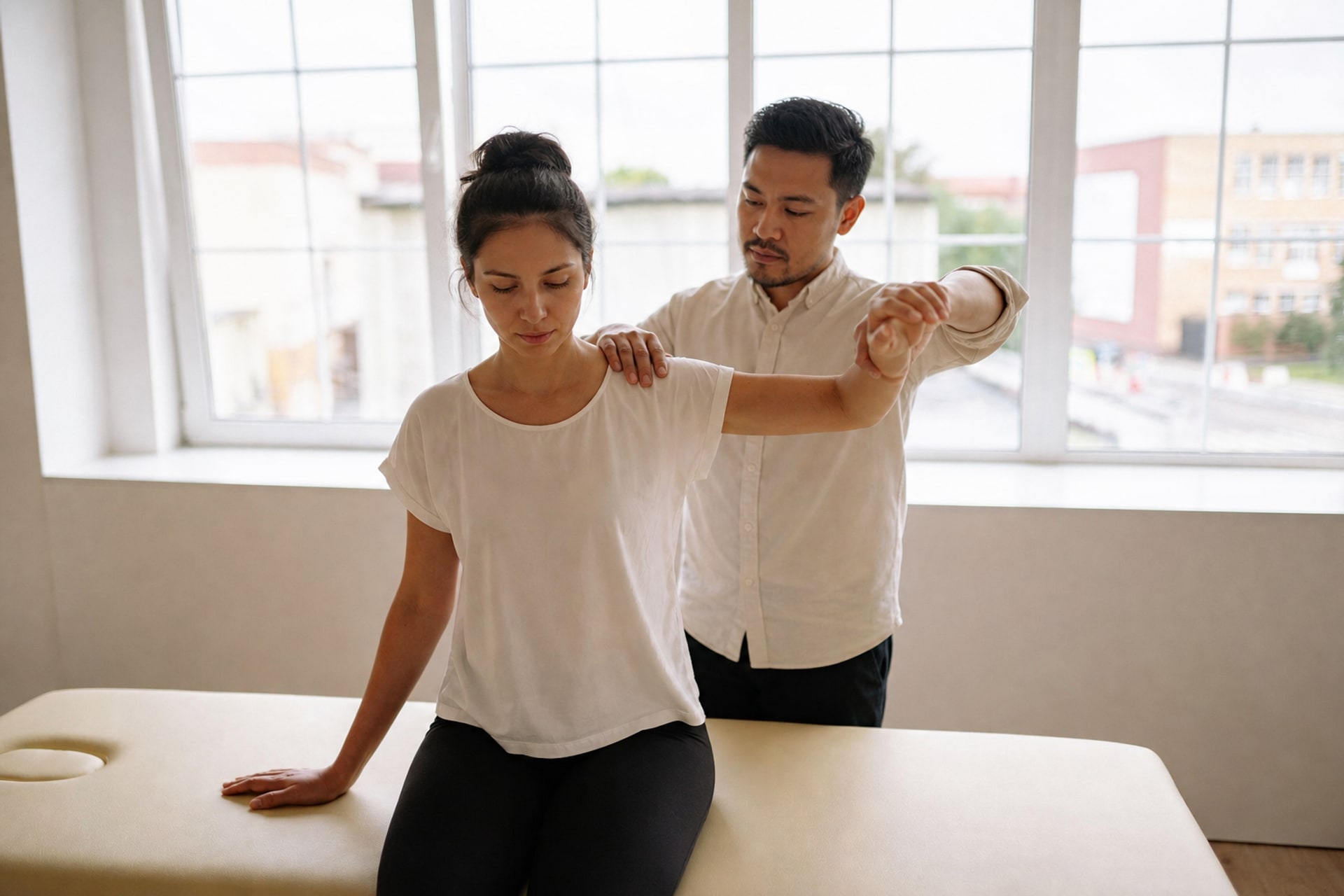
The site of pain is rarely the source of pain.
Most people arrive having been treated where it hurts. We test how the whole chain moves first, because a stiff ankle writes knee pain and a weak hip writes low back pain, and neither gets better by working on the loud end.
So every plan starts with a scored assessment and ends with a re-test. The adjustment and the soft tissue work open a window; the loading work is what keeps it open after you leave. That is also why we plan for discharge rather than for a standing appointment.
Palmer West graduate, CCSP. Built the Baseline Score because she got tired of guessing.
Find us in Culver City
4118 Sepulveda Boulevard
Culver City, CA
- Monday6:30 AM to 7:00 PM
- Tuesday6:30 AM to 7:00 PM
- Wednesday6:30 AM to 7:00 PM
- Thursday6:30 AM to 8:00 PM
- Friday6:30 AM to 5:00 PM
- Saturday8:00 AM to 2:00 PM
- SundayClosed
05 / book
Book your assessment
Forty minutes, a flat price, and you leave with a plan either way.